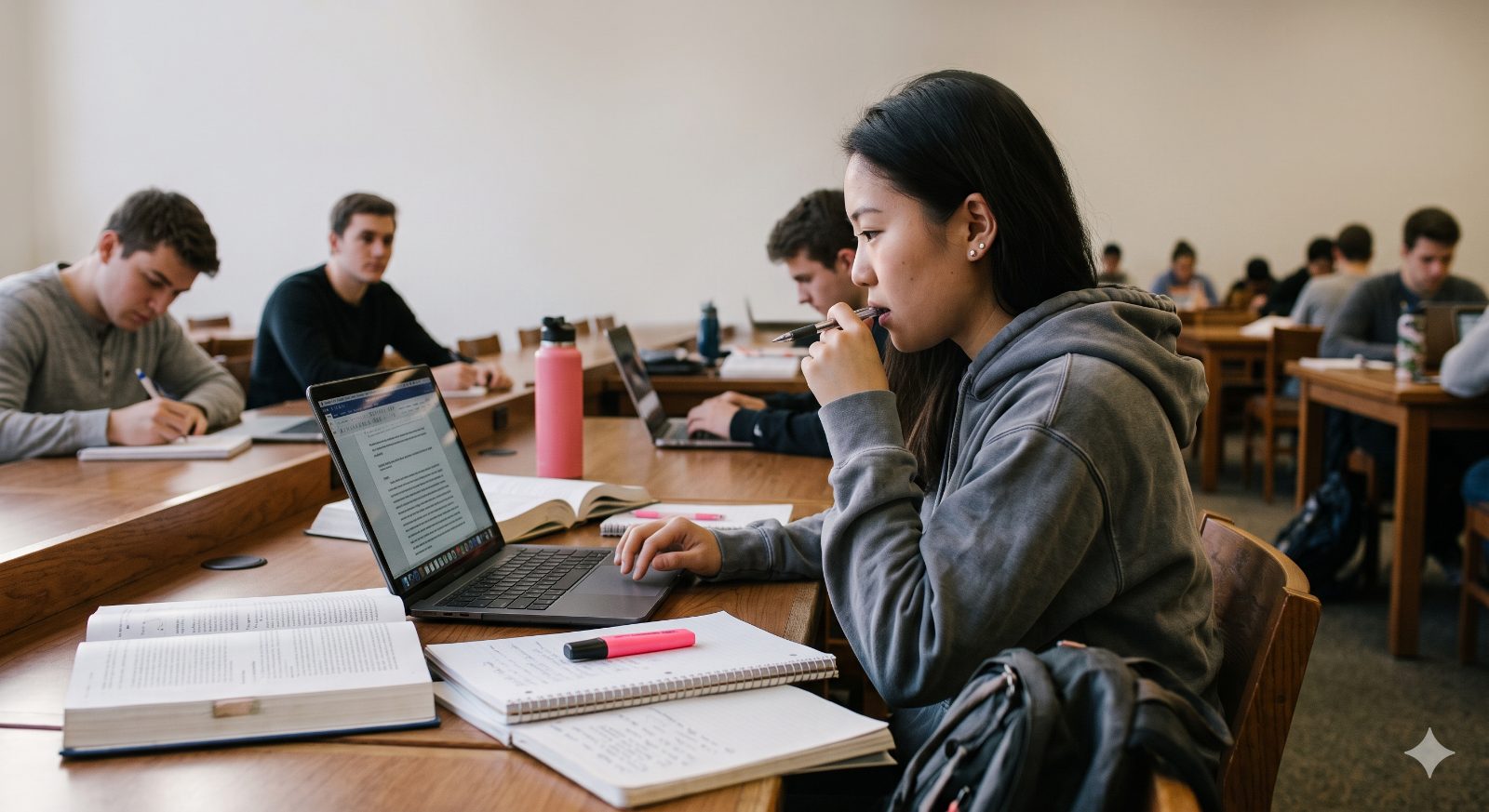
Average 5 nights of bad sleep a week in college and your GPA goes from a 3.6 to 3.5. Sleep poorly all 7 nights a week and your GPA slips to 3.46.1
And it’s not just grades. Poor sleep in school affects relationships, decision-making, and health too.2
Seven to nine hours is the recommended amount of sleep for young adults.3 In a recent study, only 4% of college students got at least seven hours on all five weeknights. 20% got it on none of them. And 94% said they wanted more sleep than they were getting.4
Wanting it and getting it are different problems — that’s why we developed our College Sleep Hacks™ — sleep education that shows students what’s actually costing them sleep at school: dorms, roommates, late meals, irregular schedules, caffeine and more. Built on sleep research from Harvard, MIT, UC Berkeley and Carnegie Mellon, students get a reminder text or email at a pace they choose with a link to each hack and complete it in 5-7 minutes on our site. The whole program takes 2-3 hours.
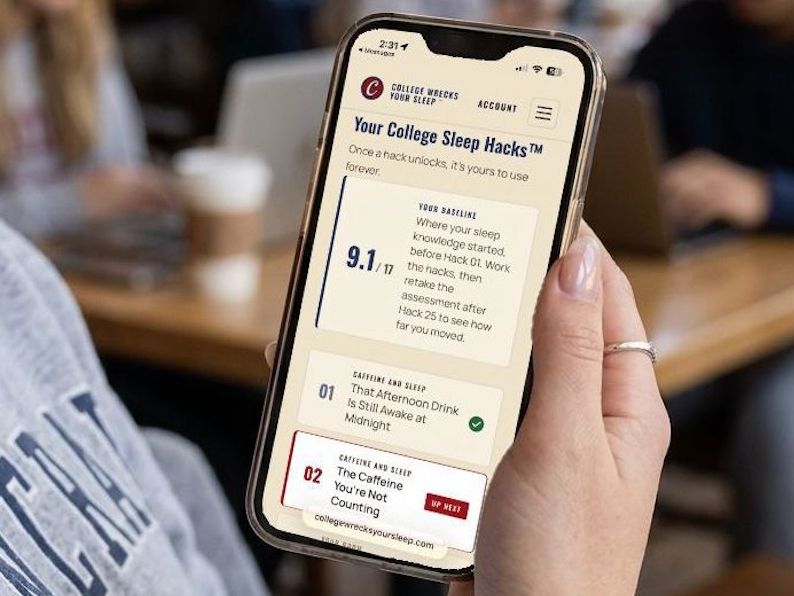
You send the code. The account is theirs to manage — their answers, their assessment scores, with the option to notify you upon completion. That’s intentional — a sleep program they own is the one they will finish.
60-day money-back guarantee
Full refund if the student never starts, or if they start and it is not for them, up to 10 Sleep Hacks opened. Refund Policy
Cinderblock walls that hold heat. A roommate on a different schedule. A hallway that never fully goes quiet. An 8AM Tuesday they didn’t choose and a lab that runs until 9PM on Wednesday. A library selling cold brew until midnight. A dining hall that closes early.
None of that is a character flaw. It’s an environment — and it’s the same environment at every school in the country. The student didn’t fail at sleeping. They were placed inside a machine that’s very good at preventing it, and nobody taught them how best to adapt.
A tip tells a student what to do. It doesn’t tell them why — so the first hard week, it’s gone. Every hack gives the reason first, then the one thing to do about it. That’s the part that survives.
Every College Sleep Hack™ has four parts“I especially liked that it didn’t just give tips, it also explained the science behind them. This made the advice feel much more practical and easier to apply.”
Jensen K. · Indiana University
“Message reminders for hacks come through without issue and serve as a good reminder. Would definitely recommend to anyone, but especially college students.”
Dylan S. · Michigan State University
This year a randomized experiment measured it directly. Researchers assigned 1,149 students to a sleep intervention or a control group, tracked them with Fitbits, and pulled grades from the university registrar. The treatment group slept about 19 more minutes a weeknight and earned semester grades 0.075 to 0.088 grade points higher. Because assignment was random, the difference is down to the sleep.4
No subscription. Nothing else to buy.
Buy NowFor students 18 and older.
You receive a registration code after purchase to send to the student.
See our 60 Day Refund Policy.
Full refund within 60 days, as long as they’ve opened 10 or fewer of the 25 hacks. Email us from the address on the order.
No. $99 once, and there is nothing else to buy. No renewal, no expiry, no upsell.
An app tracks what already happened. This teaches the handful of things that actually change it in a dorm — caffeine timing, light, temperature, naps — and stops. It ends; a subscription doesn’t.
No. A hack takes 5-7 minutes, and the student picks whether they arrive daily over 25 days or five at a time over a week.
More on the research behind this: Does more sleep actually improve college grades?